Getting Started
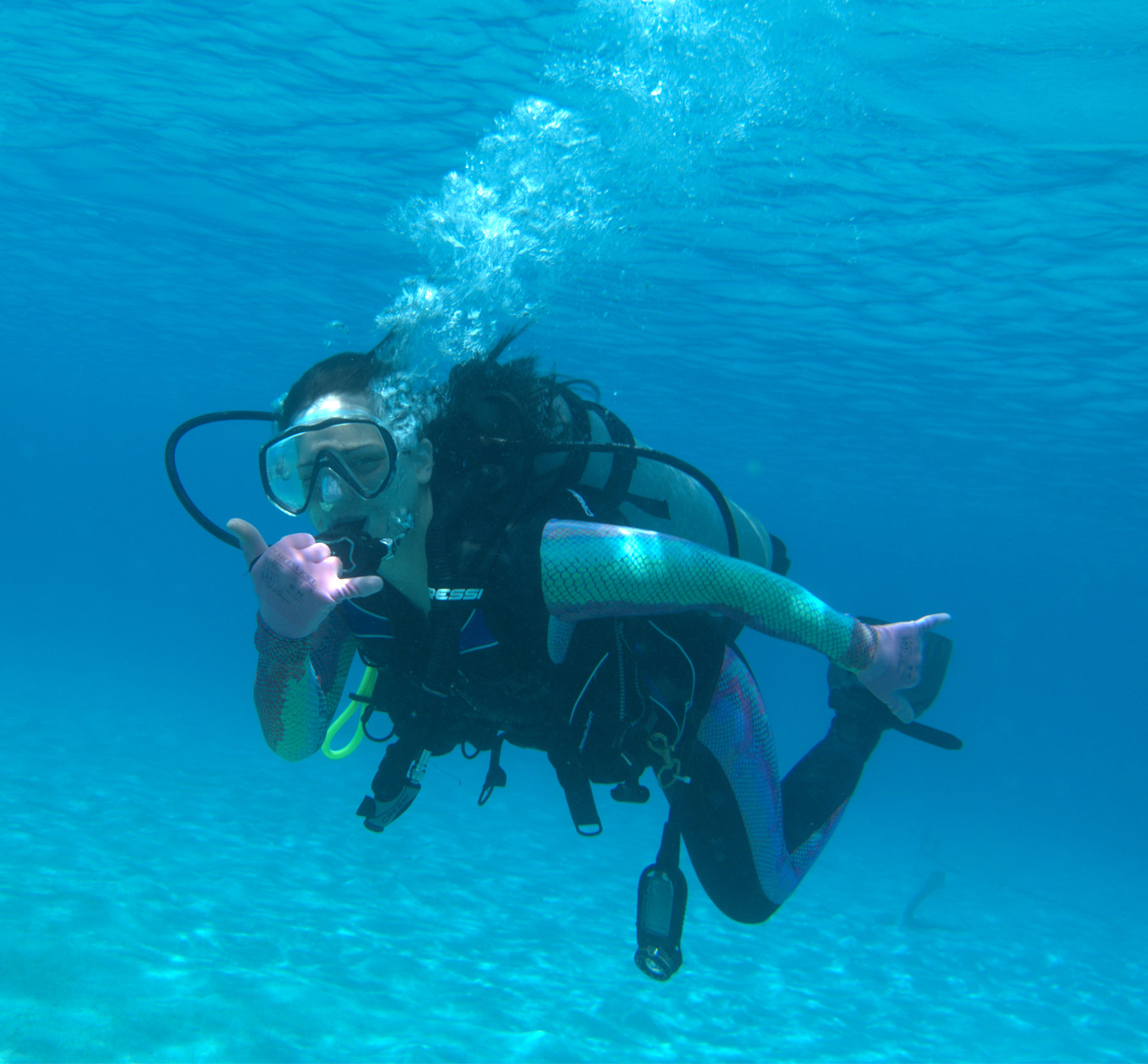
Welcome — you made it here for a reason.
Maybe someone told you diving isn't an option anymore. Maybe you're just curious what's actually possible. Either way, you're in the right place.
This page isn't a program or a checklist to complete perfectly — it's the questions we wish someone had handed us before we started. Talking to your neurologist, finding a dive shop that gets it, figuring out what you actually need to feel safe in the water — none of that has to be figured out alone anymore.
Take what's useful, skip what isn't, and go at your own pace. There's no wrong way to start.
Click here for a list of questions to ask your neurologist.
Click here for a list of questions for a dive shop.
Not medical advice. Talk to your whole team before diving — your neurologist, DAN (Divers Alert Network), and the dive shop or instructor you're working with. Every dive shop is different, and every disabled diver is different — this isn't about finding the "right" shop, it's about finding the right fit for you.
🧠 Questions to Ask Your Neurologist
Disclaimer: Every person with MS is different, and every neurologist has different levels of familiarity with scuba diving. Your neurologist may not be a diving expert—and that's okay! These questions are simply a starting point for discussing whether there are any MS-related concerns you should consider before learning to scuba dive. Your dive instructor or dive shop can help with the diving-specific side of things, and you may want to consult a dive-medicine physician if needed.
- Is there anything about my MS that would make scuba diving unsafe for me?
- Are there any of my current symptoms that I should be concerned about when scuba diving, as far as you know?
- Could fatigue be a concern for me while diving, and does exertion or mild oxygen changes affect that differently than other exercise?
- Am I especially heat-sensitive, and is that something I should plan around before or after a dive?
- Are there certain symptoms or warning signs that should make me skip a dive that day?
- Are any of my medications something I should be concerned about when scuba diving?
- Is there anything about my MS that could affect my ability to swim, balance, or physically handle scuba equipment?
- If I've had vision-related symptoms (like optic neuritis), is that something I should mention to my dive instructor?
- If bladder or bowel symptoms are a factor for me, is there anything I should know or plan for around dive length or gear?
- Could cognitive fog affect how I should plan dives or communicate with my dive buddy?
- Are there any other activities or conditions you think I should avoid while diving?
- Do you think I should get an opinion from a doctor who specializes in dive medicine before I start?
- If you're not sure about the diving-specific risks, who would you recommend I talk to?
Questions to Ask a Dive Shop:
-
Have you worked with divers who have mobility, balance, strength, coordination, or fatigue limitations — including MS specifically?
-
How do students get in and out of the water — pool, shore, boat — and what assistance or equipment (lift, ramp, adaptive entry) is available?
- If I can't perform a standard certification skill the conventional way, can it be adapted, and who decides if the adaptation is acceptable?
- Will I have a dedicated instructor or buddy, and are they comfortable working with me one-on-one?
- What's your plan if I get fatigued, lose control underwater, or can't exit the water on my own?
- Can I do a pool session or Discover Scuba experience before committing to a full course?
- What medical clearance do you require, and have you worked with physicians on dive medical questions before?
- What's included in the total cost, and are adaptive accommodations (extra instructor time, private sessions) extra?
- Can the course be spread out over more time than a typical student needs?
- "If you were in my position, what would you want to know before trusting this shop to teach you to scuba dive?"
That last one tells you the most. A good shop won't say "don't worry, we'll figure it out." They'll sit down with you, ask about your abilities, and talk specifics.
And don't be afraid to actually tell them what you need. Say the condition out loud. Say the limitation out loud. Most divers aren't trying to keep you out of the water — we want you in it with us. But we want you in it safely, and that only happens if you tell us what's actually going on instead of hoping nobody notices.
Full Question Bank
Once a shop clears the first list, here's the deeper set to work through before you commit:
♿ Accessibility & disability-specific
- Do you have an instructor trained in adaptive diving or disabled-diver instruction?
- Are you comfortable modifying the standard training process based on what I can/can't physically do?
- Can we discuss my specific limitations before I enroll to figure out if your program is appropriate?
- What adaptations have you used for other disabled students?
- Are there things you'd require me to be able to do physically before participating?
🤿 Entry & Exit
- If there are stairs, a ladder, or a beach entry, what assistance is available?
- Can someone assist me physically getting into/out of the water?
- How do you handle a student who can't independently climb a boat ladder?
- Are your dive boats accessible?
- Can I see the boat/access setup before committing?
🏊 Skills & Certification
- Do I have to perform every skill exactly the way a non-disabled diver does?
- Can the instructor modify equipment configuration to make a skill easier?
- Will I be evaluated on performing the skill safely, not on performing it the "standard" way?
- What happens if we find out mid-training that a particular skill isn't possible for me?
🧑🏫 Instructor & Buddy Support
- Does the shop provide a support diver, or do I need to bring my own?
- Does my buddy need to be certified?
- Will I ever be expected to dive without extra support?
- How many students are usually in a class, and can I do private or semi-private?
⚙️ Equipment
- Do you have adaptive scuba equipment available?
- Can I try equipment before enrolling or purchasing?
- How heavy is the gear I'll be expected to carry on land, and will someone help transport it?
- Are there different BCD, fin, mask, or regulator options that might work better for me?
- Can I use my own adaptive equipment if I have it?
🧪 Try-Before-You-Commit
- Can I use a Discover Scuba session to figure out what adaptations I'll need?
- Can I try equipment in the water before buying anything?
- What happens if I find out scuba isn't physically workable for me after trying it?
🩺 Medical Clearance
- What medical forms do you require before training?
- Do I need physician clearance first?
- Can the shop/instructor communicate directly with my doctor if questions come up?
- What happens if the medical questionnaire flags something for further evaluation?
💰 Cost & Logistics
- How many pool sessions and open-water dives are included?
- How much equipment is included in the price?
- Are boat dives, certification, or rental equipment extra?
- What happens if I need more time or need to stop mid-session due to fatigue?
🚨 Safety
- Does your staff have training in assisting disabled divers during emergencies?
- What additional risks do you see for me specifically, and what would reduce them?
- Under what circumstances would you tell me scuba isn't currently safe for me?
Disabled divers and dive shops vary a lot — a shop that can't accommodate one need may be great for another. This list is meant to start the conversation, not pass or fail anyone.